
When To See a Pediatric Dentist for Braces?
We usually suggest an evaluation around age seven when permanent teeth begin to emerge

As children grow, it’s very normal for teeth to come in crooked, crowded, or with bite misalignment. Common concerns include overlapping teeth, spacing problems, or a “bad bite” (malocclusion) such as an overbite (upper teeth too far forward) or underbite (lower teeth protruding).
While treatment can start at different ages, we usually suggest an evaluation around age seven when permanent teeth begin to emerge.
This early look lets us understand jaw growth patterns and tooth positioning so we can create the most effective plan.
Book AppointmentPreparing for Braces
All-on-4 Dental Implants: extraction, placement of implants and artificial teeth — now in only one day
It helps to talk openly with your child about what to expect and why the treatment matters. Invite them to think of questions they want answered.
Families often ask:
- What will my smile look like afterward?
- Will I need to change anything in my daily routine?
- Can I still play sports?
- How long will I wear braces?
- How many visits will there be?
Our team takes time to answer every question clearly and make sure both you and your child feel comfortable and informed.

The Process of Getting Braces
The placement braces can take up to two hours

At the first appointment, we perform a gentle exam and take X-rays to evaluate the teeth, jaws, and overall mouth structure. We also ask your child about any chewing or swallowing difficulties and whether they notice clicking or popping sounds.
These details help us understand the full picture. If braces are the right choice, we may take impressions during that visit or schedule a short follow-up. The impression uses a comfortable, soft material that creates an exact model of the teeth.
Custom braces are usually ready in about two weeks. The placement appointment can take up to two hours while we carefully attach the braces and make any needed adjustments for comfort.
Book AppointmentTypes of Braces for Kids
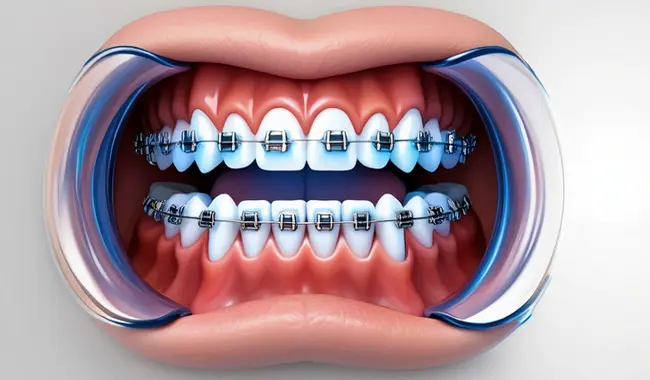
Thanks to modern orthodontic advances, children now have several excellent straightening options. Traditional metal braces are much smaller and more comfortable than they used to be. Other popular choices include:
Ceramic Braces
Tooth-colored or clear brackets and wires that are far less noticeable.
Clear Aligners
A series of 18 to 30 custom, nearly invisible, removable plastic trays changed every two weeks.
Lingual Braces
Brackets and wires attached to the back (inner) surface of the teeth so they stay hidden.
Each option offers its own advantages. We will carefully review every choice with you and your child once we confirm treatment is recommended, helping you select the best solution for lifestyle, comfort, and results.
Conditions That Can Be Treated
Several signs may show that a child could benefit from braces now or later. The most visible are crooked, crowded, or overlapping teeth.
Other important indicators include:
- Frequently biting the tongue, cheeks, or roof of the mouth by accident
- Breathing mainly through the mouth
- Losing baby teeth too early or too late
- Clicking or popping sounds in the jaw
- Teeth that don’t meet properly even when the mouth is fully closed
- Continued thumb-sucking or pacifier use after age two
Crowded or misaligned teeth can make chewing harder and cleaning less effective, increasing the chance of cavities and other problems.
During the consultation exam, we will clearly explain whether your child needs treatment right away or would benefit from monitoring and future care.
Post-treatment Care
Regular check-up visits with your orthodontist are key to ensuring the longevity of your smile
Once braces are removed, the mouth and teeth need a little time to adjust. Lips and cheeks usually adapt within one to two weeks. Good daily habits keep the smile healthy throughout and after treatment.
We recommend brushing after every meal, flossing carefully with an orthodontic flosser, and keeping regular dental visits. It’s wise to avoid hard, sticky, or chewy foods like popcorn, gummy candies, and gum. Sugary or acidic drinks and snacks should also be limited to protect against decay.
The placement of retainers is also very important. The two main categories are fixed and removable. A fixed retainer is a small metal arch that is glued with a composite material to the tongue side of the front teeth. It is totally invisible and works around the clock.
Removable retainers are clear trays or plates that the patient must wear either at night or during the day, as instructed by the doctor. One must be very careful to follow the schedule for wearing the tray, as a few days of even missed wear can lead to small undesired movements that will need to be corrected again.
Book Appointment
Contact Us Today!
Get in Touch
4225 Henderson Rd APT 101, Arlington, Virginia 22203
571-595-5030
svvdmd@gmail.com
Office Hours
Monday - Friday: 9:00 AM - 6:00 PM
Saturday: 10:00 AM - 4:00 PM
Sunday: Closed